Kitchenware Sourcing Checklist for Importers (Complete Guide)

Introduction
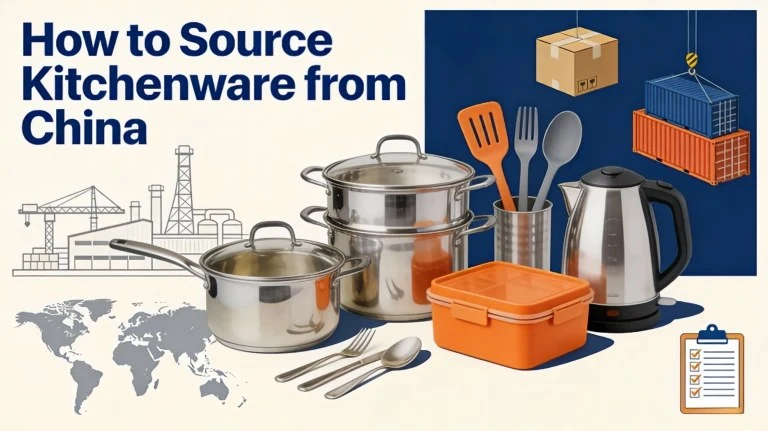
Sourcing kitchenware from China can be a complex process, especially for importers who handle multiple product categories, tight budgets and changing market demands. Without a clear system in place, it is easy to overlook important details, make decisions based on incomplete information, or face unexpected problems after placing an order.
A kitchenware sourcing checklist is one of the most effective tools to reduce risk and improve efficiency. It helps you organize every stage of the sourcing process, from initial product definition and supplier evaluation to sampling, order confirmation and logistics planning. Instead of relying on memory or informal notes, you can follow a structured workflow that covers all critical checkpoints.
This article provides a practical kitchenware sourcing checklist for importers, wholesale buyers and kitchenware brands. It breaks down the sourcing process into clear stages, explains what to check at each step, and helps you avoid common mistakes that can lead to delays, poor quality and unnecessary costs.
Before Contacting Suppliers
Before you start contacting suppliers, you need to define exactly what you want to source. Many sourcing failures happen because buyers begin discussions without clear product specifications, realistic budgets or confirmed order quantities.
If you contact a supplier with only a general request such as โI want kitchenwareโ, the supplier will find it difficult to give you an accurate quotation. You may receive vague pricing, incorrect product recommendations or samples that do not match your actual needs. For this reason, the preparation stage is extremely important.
Define Product
The first step is to define your product requirements in detail.
Kitchenware covers a very wide range of products, including stainless steel cookware, frying pans, stock pots, sauce pans, silicone utensils, ceramic tableware, electric kettles, cutlery sets, food storage containers and kitchen gadgets. Each category has different material standards, production processes, price ranges and supplier bases.
When defining your product, be as specific as possible. Ask yourself:
- What type of kitchenware do I need?
- What is the main function of the product?
- Who is the target customer?
- What material should be used?
- What size, capacity or dimensions are required?
- What design style does the market prefer?
- Are there any certification requirements?
- Does the product need to be compatible with induction, gas or electric stoves?
For example, instead of saying โstainless steel panโ, you should define it as โ28cm food-grade 304 stainless steel frying pan, induction compatible, with riveted heat-resistant handle, polished finish and standard packagingโ. This level of detail makes it much easier for suppliers to provide accurate quotations and suitable product recommendations.
Set Budget
The second step before contacting suppliers is to set a clear budget.
Your budget should include not only the unit price of the product, but also other costs such as sample fees, mold fees, customization costs, packaging costs, shipping fees, import duties, insurance and inspection costs. Many new buyers only calculate the product price and forget about these additional expenses, which can significantly reduce profit margins.
To set a realistic budget, research market price ranges for similar products. Compare different suppliers, request general price ranges and understand what factors affect cost. For example, 304 stainless steel is usually more expensive than 201 stainless steel. Multi-layer cookware is more expensive than single-layer cookware. Custom packaging and logo printing will also increase costs.
When setting your budget, leave some flexibility. Very low budgets may force you to choose low-quality products or unreliable suppliers. On the other hand, excessively high budgets may reduce competitiveness in your target market. A reasonable budget balances quality, price and market demand.
Decide Quantity
The third step before contacting suppliers is to decide your order quantity.
Quantity directly affects MOQ, unit price, production time and logistics arrangement. If you are testing a new product or entering a new market, you may prefer smaller order quantities to reduce inventory risk. If you are an established brand with stable demand, larger orders may help you get better pricing.
When deciding quantity, consider these factors:
- Current market demand
- Warehouse capacity
- Budget availability
- Sales cycle
- Seasonal trends
- Minimum order requirements
- Reorder possibility
- Shipping cost per unit
It is also important to distinguish between trial orders and bulk orders. A trial order usually allows you to test product quality, supplier reliability and market response before making a larger commitment. A bulk order is more suitable after you have confirmed that the product sells well.
By defining the product, setting a budget and deciding the quantity before contacting suppliers, you will be able to communicate more efficiently, compare quotations more accurately and reduce the risk of misunderstanding.

Supplier Evaluation
Once you have completed your preparation, the next stage is supplier evaluation.
Not all kitchenware suppliers are the same. Some are direct manufacturers with strong production capacity. Others are trading companies that act as intermediaries. Some have rich export experience, while others mainly serve the domestic market. Choosing the right supplier will have a long-term impact on your supply chain stability.
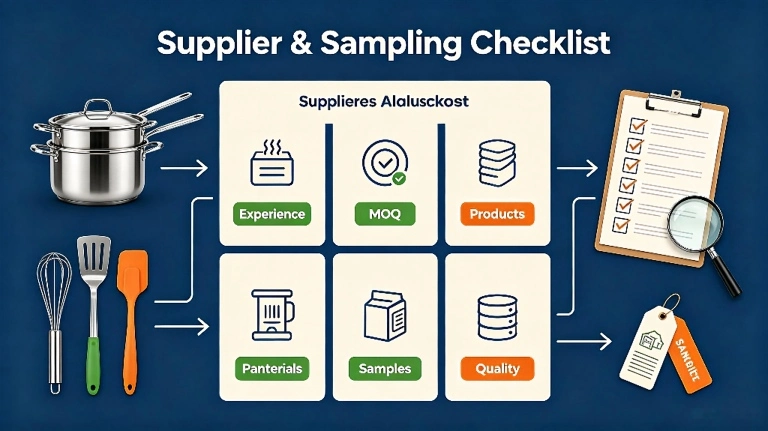
Experience
Experience is one of the most important factors in supplier evaluation.
Suppliers with many years of experience in kitchenware production are more likely to understand quality standards, production technology and buyer requirements. They have usually faced various production problems before and know how to solve them.
When evaluating supplier experience, ask:
- How long has the company been in business?
- How many years have they been exporting kitchenware?
- Which markets do they mainly serve?
- Do they have experience selling to your target country?
- Can they provide client references?
- Have they handled OEM or private label orders before?
- Do they have relevant product certifications?
A supplier with export experience will usually be familiar with international documentation, packaging requirements, shipping terms and quality control procedures. This can save you a lot of time and avoid unnecessary communication problems.
MOQ
Minimum order quantity, or MOQ, is another key factor to evaluate.
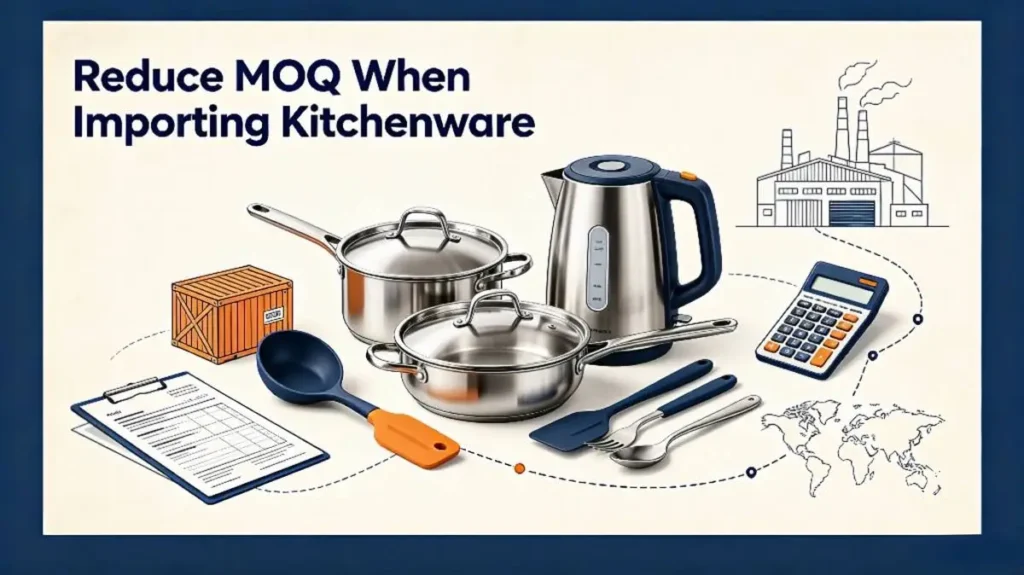
MOQ requirements vary greatly between suppliers. Some factories require large minimum orders because they produce in bulk and want to spread fixed production costs across many units. Others are more flexible and accept small trial orders.
When evaluating MOQ, consider the following:
- Is the MOQ suitable for your order size?
- Can the supplier accept mixed SKU orders?
- Is there a lower MOQ for standard products?
- Is there a higher MOQ for custom products?
- Can MOQ be reduced after successful trial orders?
- Is the MOQ based on unit count or total order value?
For new importers or brands testing new products, high MOQ can create serious inventory pressure. Therefore, it is important to find suppliers who can offer flexible MOQ options without forcing you to overstock.
Product Range
The product range of a supplier is also an important evaluation point.
A supplier with a wide and compatible product range can help you consolidate multiple orders into one shipment, simplify supplier management and reduce logistics costs. For example, if you need cookware, utensils and kettles, a supplier who can provide all three categories will make your sourcing process much easier.
However, product range should not be confused with lack of specialization. The best suppliers usually specialize in specific categories while still offering enough variety to support buyer needs.
When evaluating product range, ask:
- Does the supplier specialize in your target product category?
- Can they provide multiple SKUs under the same category?
- Are the products suitable for your market positioning?
- Can they develop new products if needed?
- Do they have standard products available for trial orders?
- Can they support custom designs?
A suitable supplier should be able to meet your current needs while also supporting future growth.
Sampling Checklist
Before placing a large order, you should always request samples.
Samples are the most reliable way to check real product quality. Product photos, descriptions and quotations can be helpful, but they cannot replace physical inspection. Through samples, you can evaluate material quality, finishing and packaging.
Material Quality
Kitchenware is a food-contact product, so material quality is critical.
Low-quality materials can cause safety risks, rust, discoloration, deformation and customer complaints. When checking samples, confirm whether the material matches the supplierโs description.
For stainless steel cookware, check whether it is 201 or 304 grade. 304 stainless steel is generally considered higher quality and more suitable for food contact. For silicone utensils, check for strange odors, softness and heat resistance. For plastic products, confirm that they are food grade. For coated cookware, check whether the coating is evenly applied and durable.
If possible, ask for test reports from third-party laboratories. These reports can confirm whether the product meets safety standards such as FDA, LFGB or CE.
Finishing
Finishing refers to the details of how the product is made and finished.
Even good materials can become low-quality products if the finishing is poor. When checking samples, look for:
- Smooth and polished surfaces
- No sharp edges
- No scratches or dents
- Even coating
- Stable handles
- Well-fitting lids
- Clean welding points
- Consistent colors
- Durable packaging
These small details may seem unimportant, but they can greatly affect customer satisfaction. A product with sharp edges or loose handles will receive negative reviews, even if the material is good.
Packaging
Packaging is also part of product quality.
Poor packaging can cause damage during international shipping. It can also affect the customerโs first impression when receiving the product.
When checking samples, also evaluate packaging:
- Is the packaging strong enough?
- Does it protect the product from scratches and impacts?
- Can it be used for retail display?
- Is custom packaging available?
- Does it include necessary product information?
- Can the supplier accept small custom packaging orders?
If you plan to sell products directly to consumers, packaging should not only protect the product but also support your brand image.
Order Confirmation
Once you have selected a supplier and approved samples, the next stage is order confirmation.
This is the stage where all details must be clearly confirmed before production begins. Any unclear terms at this stage may lead to problems later.
Price
Price is obviously one of the most important points in order confirmation.
However, price should not only be discussed as a unit price. You should also confirm what is included in the price.
Ask:
- Does the price include packaging?
- Does the price include logo printing?
- Are there any additional fees?
- What is the price for different order quantities?
- Is there a discount for larger orders?
- Are mold fees or tooling fees included?
- Are sample fees refundable?
- What payment terms are available?
All these details should be confirmed in writing. Verbal agreements are easy to misunderstand, especially in cross-border trade.
Delivery Time
Delivery time is another critical point.
Late deliveries can cause missed sales seasons, empty shelves and customer dissatisfaction. When confirming orders, ask:
- What is the production lead time?
- What is the delivery time after production?
- How long does shipping take?
- What factors may cause delays?
- Does the supplier have peak seasons that affect delivery?
- Can they provide a production schedule?
- How will they inform you of progress?
It is wise to add extra buffer time to your plan. Unexpected problems such as material shortages, factory scheduling issues or customs delays can happen.

MOQ
Even if you have discussed MOQ earlier, you should confirm it again during order confirmation.
Make sure the MOQ is clearly stated in the contract or proforma invoice. If you have negotiated a lower MOQ or mixed MOQ, confirm that these terms are accepted by the supplier.
Also confirm whether the MOQ applies per SKU or per total order value. This is important because mixed orders can often help you meet the supplierโs requirements without ordering large quantities of a single product.
Logistics Planning
After the order is confirmed and production is completed, you need to plan logistics.
Logistics planning affects delivery time, cost and product condition. A good logistics plan ensures that your goods arrive safely and on time.
Shipping Method
The first decision in logistics planning is the shipping method.
The three most common options are sea freight, air freight and international express. Each has different advantages and disadvantages.
Sea freight is usually the most cost-effective option for large orders. It is suitable for bulk shipments, heavy products and goods that are not urgently needed. However, sea freight is slower and requires more planning.
Air freight is faster than sea freight but more expensive. It is suitable for small orders, urgent shipments or products with high value.
International express is the fastest option and usually includes door-to-door delivery. It is very convenient for samples or very small orders, but it can be costly for larger shipments.
When choosing a shipping method, consider:
- Order volume
- Product weight and size
- Budget
- Delivery urgency
- Destination country
- Customs clearance requirements
- Insurance needs
Container Options
For larger orders, you will also need to consider container options.
The most common container types are 20-foot containers and 40-foot containers. A 20-foot container is suitable for smaller bulk orders, while a 40-foot container can hold more goods and usually offers a lower cost per unit.
If your order is not large enough to fill a full container, you can consider LCL, or less than container load. LCL allows you to share container space with other shippers. This is useful for mixed orders or smaller shipments.
For mixed orders, you can combine different types of kitchenware into one shipment. This can help you reduce MOQ pressure, diversify your product range and optimize logistics costs.
For mixed orders, you can visit our Cookware Sourcing Page to explore flexible sourcing options.
Conclusion
A checklist reduces risk and improves efficiency.
Kitchenware sourcing involves many steps, from product definition and budget setting to supplier evaluation, sampling, order confirmation and logistics planning. Without a clear checklist, it is easy to miss important details, make rushed decisions and face costly problems later.
By following a structured kitchenware sourcing checklist, you can compare suppliers more objectively, verify product quality more systematically, confirm order terms more clearly and plan logistics more confidently. This approach helps you minimize risk, control costs and build a more reliable supply chain.
The key is not to skip stages. Preparation before contacting suppliers will save you time. Supplier evaluation will reduce the risk of bad cooperation. Sampling will help you avoid quality problems. Order confirmation will prevent misunderstandings. And logistics planning will ensure that your goods arrive safely.
For importers, wholesale buyers and kitchenware brands, a practical sourcing checklist is not just a document. It is a tool that helps you make better decisions and build long-term supplier relationships.
Want a simplified sourcing process?
Whether you need help defining product specifications, verifying suppliers, checking samples, negotiating MOQ or planning mixed shipments, we venus sourcing can support you through the entire kitchenware sourcing process.