What is Stainless Steel Cookware?
Complete Guide for Buyers
Stainless steel cookware is one of the most widely used, versatile, and trusted kitchen products for both residential home cooking and commercial restaurant use worldwide. Unlike non-stick, aluminum, or cast iron cookware, stainless steel options balance durability, safety, and affordability, making them a top choice for importers, wholesale suppliers, and kitchenware brand owners sourcing products for global markets. If you are new to kitchenware sourcing, understanding exactly what stainless steel cookware is, its core features, different material grades, benefits, and suitable usage scenarios will help you select high-quality, marketable products that reduce returns and boost customer satisfaction.
In simple terms, stainless steel cookware refers to pots, pans, and cooking utensils manufactured from corrosion-resistant stainless steel alloy. The material is formulated with iron, chromium, and other trace elements that give it unique anti-rust and anti-corrosion properties. Thanks to continuous manufacturing upgrades in China’s kitchenware industry, modern stainless steel cookware now comes in diverse styles, sizes, and finishes, suitable for everyday home cooking, high-frequency commercial catering, and even premium retail branded product lines. This complete buyer’s guide breaks down every essential detail you need to source stainless steel cookware professionally.
Key Features of Stainless Steel Cookware
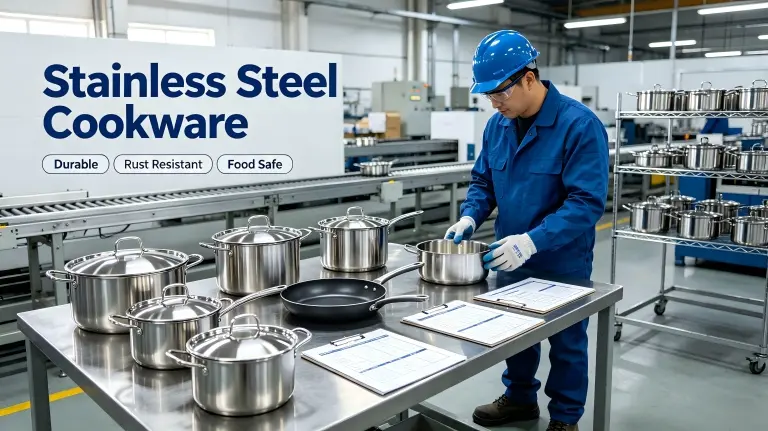
The global popularity of stainless steel cookware stems from three irreplaceable core features that outperform most other cookware materials. These characteristics not only improve user experience for end consumers but also make the products easy to sell and low-maintenance for wholesalers and retailers.
Durable. Stainless steel cookware is famous for its exceptional sturdiness and structural stability. Unlike fragile ceramic cookware that chips easily or soft aluminum cookware that deforms after frequent heating, high-quality stainless steel cookware resists bending, warping, and physical damage. Its tough metal structure withstands daily high-temperature cooking, repeated washing, and long-term storage without obvious wear and tear. For commercial kitchens with heavy daily use, this durability drastically cuts replacement costs. For retail buyers, it translates to long product lifespans and positive review rates, making stainless steel cookware a high-reputation product category for resellers.
Rust-resistant. As its name suggests, stainless steel material is highly resistant to rust and oxidation. Ordinary iron cookware easily oxidizes when exposed to water, steam, and air, forming rust that affects food safety and appearance. Stainless steel contains chromium, which forms a protective invisible film on the metal surface. This layer blocks air and moisture penetration, effectively preventing rust, stains, and corrosion even after years of use. This feature is especially critical for coastal markets or humid regions where kitchen equipment is prone to moisture damage.
Food-safe. Safety is the top priority for all food-contact kitchen products, and stainless steel is universally recognized as a food-grade safe material. Qualified stainless steel cookware does not release harmful chemicals, toxic coatings, or heavy metals during high-temperature cooking. Unlike non-stick pans that may peel or produce toxic fumes when overheated, stainless steel maintains stable physical and chemical properties. Reliable stainless steel cookware suppliers always provide FDA and LFGB certification reports, ensuring full compliance with international food safety standards for cross-border sales.
Types of Stainless Steel Cookware (201 vs 304 Grade)
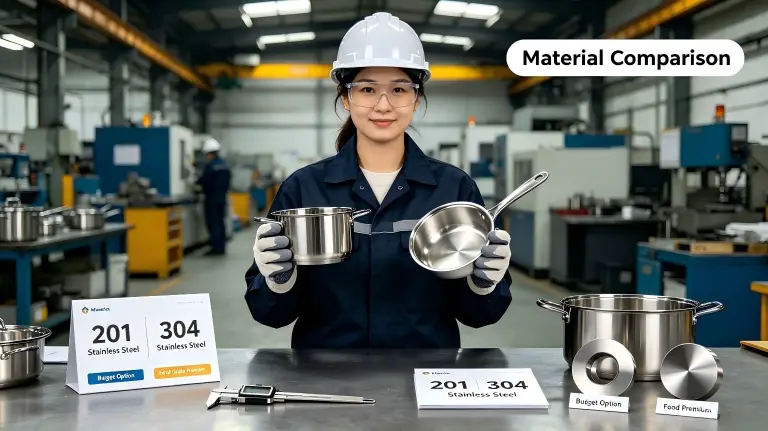
For cookware importers, distinguishing between different stainless steel grades is the most critical sourcing skill. The two mainstream materials used in kitchenware manufacturing are 201 stainless steel and 304 stainless steel. Their differences in material composition, cost, durability, and safety directly determine product positioning, pricing, and target sales markets.
201 Stainless Steel Cookware. 201 stainless steel is an economical alloy material widely used in budget-level kitchenware. It contains lower chromium and higher manganese content, which reduces production costs while maintaining basic anti-rust performance. 201 stainless steel cookware features affordable pricing, bright polished surfaces, and complete product styles, making it ideal for low-budget wholesale markets, supermarket daily sales, rental house kitchen matching, and promotional gift sets. While it meets basic daily cooking needs, it has weaker corrosion resistance compared to 304 grade. In long-term humid environments or frequent high-intensity use, 201 stainless steel may develop minor surface spots. It is the best cost-effective choice for mass entry-level cookware wholesale orders.
304 Stainless Steel Cookware. 304 stainless steel is the industry-standard food-grade premium material. With higher chromium and nickel content, it delivers excellent anti-corrosion, anti-oxidation, and high-temperature resistance. 304 stainless steel never rusts under normal kitchen usage, maintains a smooth surface after years of use, and does not react with acidic or alkaline foods such as tomatoes, vinegar, and citrus ingredients. It fully meets strict European and American food safety certification standards. For mid-to-high-end retail brands, commercial restaurant equipment, and cross-border e-commerce premium listings, 304 stainless steel cookware is the most mainstream and trustworthy option with extremely low after-sales complaint rates.
Core Benefits of Stainless Steel Cookware
Whether you are sourcing for retail branding, wholesale distribution, or commercial catering supply, stainless steel cookware brings unique business advantages thanks to its two core selling points: ultra-long lifespan and effortless cleaning.
Long Lifespan. Compared with disposable or short-cycle cookware products, stainless steel cookware has an outstanding service life. Qualified 304 stainless steel cookware can be used continuously for 5 to 10 years, while standard 201 stainless steel products can serve users for 3 to 5 years. This long service cycle creates high product value for end buyers and forms a strong market reputation for sellers. Unlike non-stick pans that need replacement every one or two years due to coating peeling, stainless steel cookware has no consumable parts, greatly reducing customer repurchase thresholds and improving brand loyalty.
Easy Cleaning and Maintenance. Stainless steel’s smooth, dense metal surface prevents oil stains, food residues, and scale from adhering firmly. After daily cooking, users only need warm water and ordinary dish soap to clean the cookware quickly. There is no need for complicated maintenance or special cleaning agents. Even after long-term use, the surface can be restored to a bright state with simple polishing. This user-friendly feature makes stainless steel cookware popular among family users, restaurant chefs, and rental property managers, expanding its market coverage and sales volume.
Best Use Cases for Stainless Steel Cookware
Stainless steel cookware has extremely wide applicability, covering both civilian household scenarios and professional commercial catering scenarios. Understanding targeted usage scenarios helps you accurately position your products and match the right customer groups during sales.
Home Kitchens. For family daily cooking, stainless steel cookware is a universal all-match choice. It supports all heating methods including induction cookers, gas stoves, electric stoves, and ceramic stoves. Stainless steel frying pans, soup pots, milk pots, and full cookware sets can meet daily frying, boiling, stewing, and simmering needs. Its safe material, durable performance, and simple appearance fit most family decoration styles, making it the most essential product for home kitchen wholesale and retail sales.
Restaurants and Commercial Kitchens. Commercial catering scenarios have extremely high requirements for cookware durability, safety, and high-frequency use resistance. Stainless steel cookware can withstand long hours of high-temperature cooking, frequent cleaning, and intensive use without deformation or damage. Large-capacity stainless steel stock pots, commercial frying pans, and multi-specification cookware are standard equipment for restaurants, hotels, cafeterias, and catering chains. For bulk commercial procurement orders, commercial stainless steel cookware is always the first choice due to its stable quality and low replacement cost.
Browse our full product lineup and customizable manufacturing options for your business: Cookware Page
Conclusion
Stainless steel cookware is a timeless, high-demand kitchen product favored by global buyers for its durability, food safety, and versatile application scenarios. With two mainstream material grades (201 and 304), it can fully cover low-budget wholesale, mid-end retail, and high-end commercial catering markets. Its long service life and easy-clean features ensure stable sales volume and low after-sales pressure for importers and resellers. Choosing the right stainless steel grade according to your target market is the key to improving product competitiveness and profit margins.
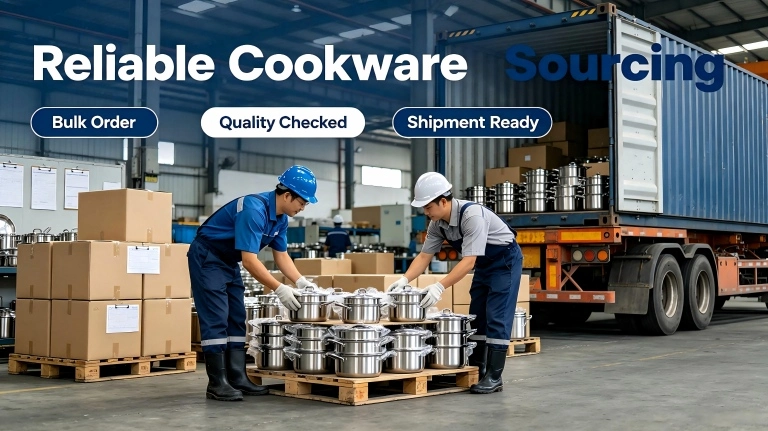
Want to source high-quality, certified stainless steel cookware for your business? Whether you need entry-level 201 stainless steel bulk orders or premium 304 food-grade cookware sets, our team provides professional cookware sourcing solutions, factory verification, quality inspection, and customized service support.
Get cookware sourcing solutions today