How to Combine Kitchenware Products in One Container (Save Cost Guide)
Introduction
For small-scale importers, emerging kitchenware brand owners, and wholesale resellers sourcing goods from China, excessive shipping fees and rigid factory MOQ rules are two of the most common profit barriers. Most first-time buyers fall into a predictable trap: filling an entire shipping container with just one single type of kitchenware. Whether it’s full stainless steel cookware sets, electric water kettles, or silicone cooking utensils, this single-product loading method leaves tons of valuable container space unused, which directly drives up the unit shipping cost for every item you import.
Sticking to a single-product inventory also limits your business flexibility. If your container only carries frying pans, your retail lineup becomes overly narrow, failing to meet diverse customer needs and weakening your market competitiveness. It’s an inefficient, costly sourcing habit that holds back small and mid-sized kitchenware businesses from scaling steadily.
This is where mixed kitchenware container shipping makes a huge difference for importers of all sizes. Blending different compatible kitchenware items into one full container load lets you maximize every inch of shipping space, cut down per-unit logistics expenses, reduce overstock risks, and diversify your product range all at once. This practical, industry-focused guide breaks down why mixed container shipments are essential for smart China sourcing, which kitchenware items work best together, key loading rules to avoid damage, and how you can leverage this strategy to boost your overall profit margins.
Why Mixed Containers Matter for Kitchenware Importers
Mixed container loading is far more than a simple logistics trick — it’s a practical business strategy that optimizes your cost structure and streamlines daily sourcing operations. Compared with traditional single-item container shipping, mixed product shipments deliver two tangible, bottom-line benefits that every kitchenware importer should prioritize.
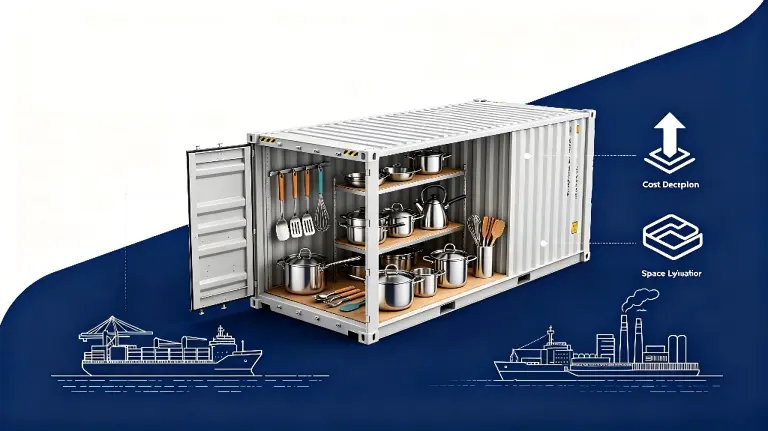
First and foremost, mixed shipments effectively lower your overall shipping expenses. Ocean freight for standard 20ft and 40ft containers is charged as a flat full-container fee, not calculated by individual product units. Many new buyers don’t realize that loading only heavy stainless steel cookware or bulky kettles hits the container’s weight limit long before the volume is fully occupied. This wasted space translates directly to higher freight costs per product. By balancing heavy cookware, medium-weight kettles, and lightweight utensils in one container, you evenly distribute weight and fill empty gaps completely. Most importers cut their per-unit shipping costs by 15% to 30% with this method, creating a clear pricing advantage in competitive wholesale and retail markets.
Secondly, mixed container orders greatly improve your end-to-end sourcing efficiency. Handling separate shipments for cookware, kettles, and utensils means repeated booking fees, multiple independent quality inspections, scattered shipping documents, and extra time spent coordinating different suppliers and logistics teams. Consolidating all eligible kitchenware goods into one unified shipment simplifies the entire workflow. You only need one container booking, one set of customs declaration paperwork, and one fixed delivery timeline. This streamlined process eases inventory management, shortens overall lead times, and eliminates the hassle of staggered stock arrivals that disrupt your sales cycles.
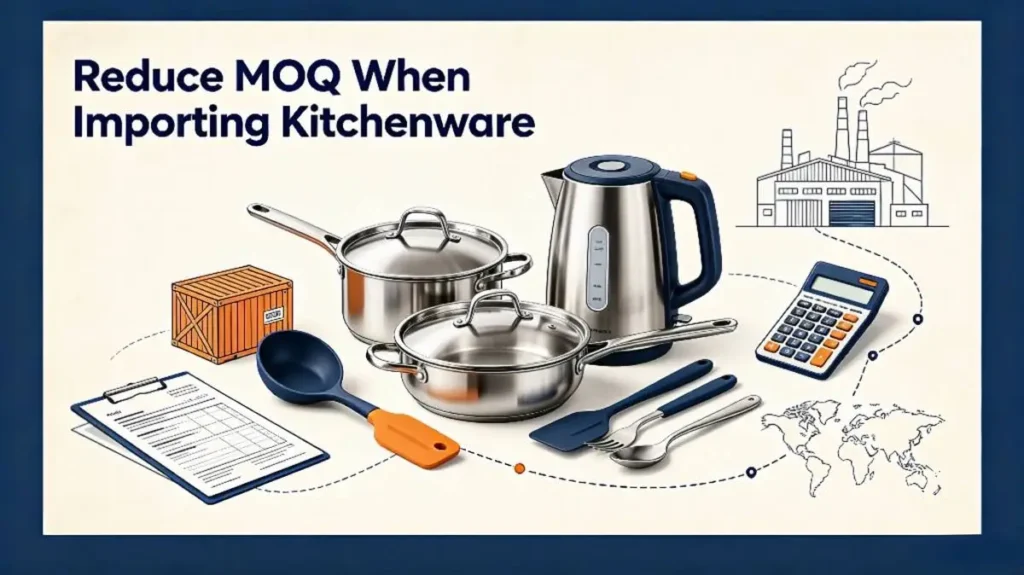
On top of cost and efficiency gains, mixed containers also solve the common low-MOQ pain point for small buyers. Most Chinese kitchenware factories enforce strict per-item minimum order quantities, but nearly all allow flexible total order value requirements. Mixing multiple product categories lets you meet the factory’s order threshold easily, without overstocking large quantities of a single slow-selling item. This makes small-batch market testing and low-volume brand operation completely feasible and low-risk.

What Kitchenware Products Can Be Combined in One Container
While mixing products boosts efficiency, not all kitchenware items pair well for container shipping. Incompatible combinations can lead to crushed packaging, deformed products, messy cargo arrangement, and even full-container sorting issues upon arrival. To guarantee safe, damage-free shipping and optimal space usage, you need to pair products with complementary weight, size, and packaging attributes. The most reliable, industry-standard combination for B2B importers covers three core kitchenware categories: standard cookware, water kettles, and daily-use kitchen utensils.
Cookware (Frying pans, stock pots, sauce pans) serves as the core heavy cargo for mixed containers. Made of thick stainless steel with rigid carton packaging, these pots and pans offer strong compression resistance and uniform shapes. They form a stable base layer for container loading, preventing cargo shaking and shifting during long overseas transit. Their standardized sizing allows neat stacking, which lays a solid foundation for maximizing overall container space.
Water kettles (Stainless steel stovetop kettles, electric kettles) act as the perfect medium-weight supplementary cargo. With fixed cylindrical shapes and consistent factory packaging, kettles fit neatly into the gaps between large cookware cartons without squeezing or damaging surrounding goods. Boasting steady global market demand and balanced profit margins, they complement high-value cookware perfectly, enriching your product mix without adding excess shipping burden.
Kitchen utensils (Silicone tools, cutlery sets, mini gadgets) function as lightweight space fillers. These small, compact items come in flexible, lightweight packaging and can fill every tiny leftover gap in the container that large cookware and kettles can’t occupy. Most utensils feature low factory MOQs and fast sales turnover, letting you expand your product catalog, cater to more customer groups, and lift overall order profitability with zero extra logistics cost.
This three-category mixed combination is widely adopted by experienced kitchenware importers. It strikes an ideal balance between weight distribution, space utilization, profit diversity, and shipping safety, fully aligning with factory production rules and international container transportation standards.
Key Considerations for Mixed Kitchenware Container Loading
Mixed container shipping delivers impressive benefits, but careless loading practices can negate all your cost savings and even cause costly product damage. To ensure smooth, safe, and efficient shipments, you need to follow three critical operational considerations before confirming container loading.
First, prioritize unified packaging standardization across all products. Irregular carton sizes and inconsistent packaging thickness create random gaps and unstable stacking, drastically reducing space utilization. Before mass production, confirm uniform outer box dimensions, buffer protection materials, and carton hardness with all cooperating factories. As a basic rule, place rigid, heavy packaged cookware and kettles on the bottom layer, and tuck flexible silicone utensils and small gadgets into leftover gaps to avoid extrusion and deformation.
Second, maintain balanced container weight distribution. Uneven weight stacking — such as piling all heavy stainless steel pots on one side of the container — will cause cargo tilt, shaking, and even collapse during sea transportation. Professional loading protocols require evenly distributing heavy cookware at the bottom, placing medium-weight kettles in the middle layer, and arranging lightweight utensils on the top. This layered structure stabilizes the entire cargo and eliminates transit damage risks.
Third, tailor loading strategies to different container types. 20GP, 40GP, and 40HQ containers all have unique volume and weight limits. For new importers running trial orders with small batch sizes, a 20ft mixed container is the most cost-effective option. For established wholesale businesses with large order volumes, 40HQ containers maximize cargo capacity and unit cost savings. Professional sourcing teams can calculate customized product mixing ratios based on your order volume, product specifications, and business goals, helping you achieve over 95% container space utilization.
If you want tailored mixed-order matching, professional container loading plans, and end-to-end kitchenware sourcing support, check out our dedicated services and industrial resources here: Cookware Sourcing Page

Conclusion
Mixed container shipping is an indispensable cost-saving and efficiency-boosting strategy for every kitchenware importer sourcing products from China. Ditching inefficient single-product loading for diversified mixed shipments lets you cut down shipping costs, ease restrictive MOQ pressure, enrich your product inventory, and simplify your entire logistics workflow in one go.
By standardizing product packaging, balancing cargo weight distribution, and optimizing layered loading structures, you can avoid common shipping risks while making the most of every container’s capacity. For growing kitchenware brands and wholesale suppliers, mastering mixed container sourcing is a simple yet powerful way to reduce operational costs, stabilize supply chains, and strengthen long-term market competitiveness.
Want to optimize your shipment structure and cut down your kitchenware sourcing costs effectively? Venus sourcing team can build exclusive mixed container solutions for your business, calculate the most cost-effective product matching ratio, arrange unified pre-shipment quality inspections, and handle full-process logistics coordination for your orders.
Get a sourcing plan today to optimize your import strategy, lower your overheads, and expand your kitchenware product lineup effortlessly.