201 vs 304 Stainless Steel: What’s the Difference?
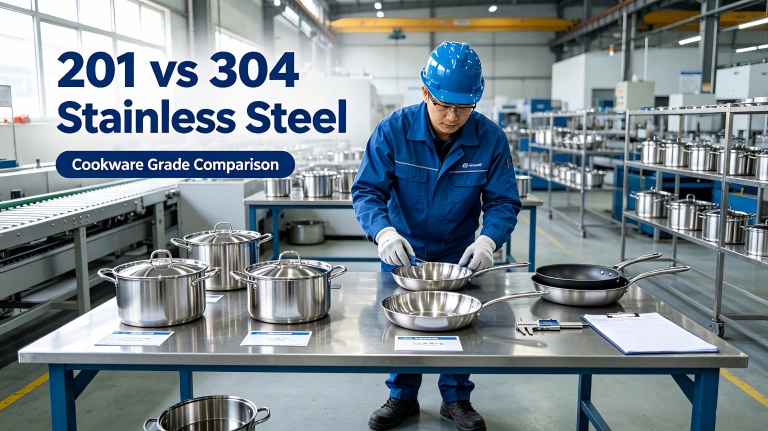
When sourcing stainless steel cookware from China, one of the most critical decisions buyers face is choosing between 201 and 304 stainless steel grades. These two materials dominate the global kitchenware market, but their differences in safety, durability, corrosion resistance, and pricing completely change product positioning, target customers, and profit margins. Many new importers either overpay for unnecessary premium materials or source low-grade steel that leads to rust complaints, safety disputes, and high return rates.
To help buyers make data-driven sourcing decisions, this guide clearly explains what 201 and 304 stainless steel are, breaks down their core differences, and shares practical selection advice for wholesale, retail, and commercial kitchen projects. Whether you are launching a new cookware brand, bulk sourcing for supermarkets, or supplying restaurant equipment, understanding these two steel grades will help you avoid sourcing mistakes and match the right products to your market. You can also explore verified grade-specific products through our professional cookware collection.
What is 201 Stainless Steel
201 stainless steel is a cost-effective Austenitic stainless steel alloy widely used in budget kitchenware and daily hardware products. It was originally developed to replace high-nickel materials and reduce manufacturing costs for mass consumer goods. Compared with premium steel grades, 201 stainless steel features lower nickel content and higher manganese composition, which significantly cuts raw material expenses while maintaining basic anti-rust appearance and metal hardness.
In practical kitchenware manufacturing, 201 stainless steel delivers bright surface finishing, strong hardness, and stable shaping performance. It is easy to polish, stamp, and mold, allowing factories to produce diverse cookware styles at affordable prices. For dry indoor environments and low-frequency home cooking use, 201 stainless steel performs well and maintains a clean metallic look for years.
However, this grade has obvious limitations. Due to its lower chromium and nickel ratio, 201 stainless steel lacks strong corrosion resistance. It cannot withstand long-term exposure to humid air, acidic food contact, or repeated high-intensity heating. In coastal areas, high-humidity environments, or frequent commercial kitchen use, 201 stainless steel cookware is prone to surface spotting, faint rust marks, and gradual oxidation. For this reason, it is mainly positioned as an entry-level, cost-effective material for low-budget wholesale, promotional gifts, rental housing kitchen matching, and discount supermarket retail.
What is 304 Stainless Steel
304 stainless steel is the internationally recognized standard food-grade stainless steel, also known as 18/8 stainless steel due to its 18% chromium and 8% nickel composition. This balanced alloy formula creates exceptional anti-corrosion, anti-oxidation, and high-temperature resistance, making it the most trusted material for food-contact kitchen products worldwide. Strict certification standards such as FDA and LFGB fully approve 304 stainless steel for daily cooking and commercial catering use.
Different from 201 material, 304 stainless steel maintains stable chemical properties even under extreme cooking conditions. It does not react with acidic, alkaline, or salty food ingredients such as vinegar, tomatoes, citrus, and seasoned broth. It resists rust, corrosion, and discoloration even after years of repeated heating, boiling, and dishwasher cleaning. Its superior ductility also allows manufacturers to create thicker, more durable cookware bodies with smoother finishing and better heat conduction.
In the kitchenware industry, 304 stainless steel represents mid-to-high-end product positioning. It is the primary choice for branded retail cookware, cross-border e-commerce premium listings, hotel catering equipment, and family high-frequency cooking scenarios. Although its material cost is higher than 201 stainless steel, its ultra-long service life, zero-rust performance, and food-safe quality drastically reduce after-sales risks and improve brand reputation for importers.
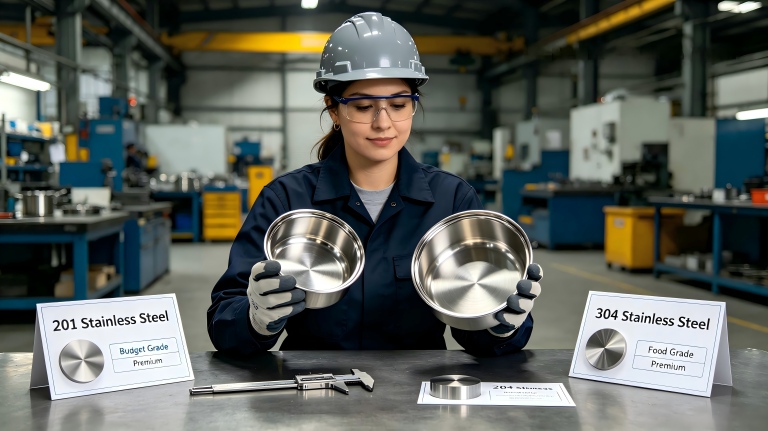
Key Differences Between 201 and 304 Stainless Steel
To help buyers quickly distinguish and evaluate the two materials, we summarize the most practical and sourcing-oriented key differences affecting product quality and sales performance.
- Corrosion and Rust Resistance
304 stainless steel far outperforms 201 in anti-rust and anti-corrosion ability. The complete chromium-nickel alloy structure of 304 forms a dense protective oxide layer on the surface, blocking moisture and air erosion. 201 stainless steel relies on manganese to replace part of nickel, resulting in a weaker protective film that cannot resist humid environments or long-term acid contact. This is why 201 cookware easily develops rust spots in coastal markets. - Food Safety and Stability
304 is certified food-safe and non-toxic at high temperatures, with no harmful substance precipitation during cooking. 201 stainless steel is not recommended for long-term high-temperature food processing, as its unstable alloy structure may cause trace metal precipitation under continuous heating, failing strict European and American food safety tests. - Service Lifespan
A qualified 304 stainless steel cookware set can last 8–10 years with daily use, while 201 stainless steel products usually show aging signs within 2–3 years. For commercial scenarios, the lifespan gap becomes even larger. - Pricing and Production Cost
201 stainless steel has a much lower raw material cost, allowing factories to offer extremely competitive wholesale prices for bulk orders. 304 stainless steel has higher material and processing costs, resulting in higher retail pricing and profit margins for branded sellers. - Application Scenarios
201 suits low-budget, short-cycle, and dry-environment use. 304 fits high-frequency family cooking, commercial kitchens, and long-term retail brand sales.
Which One to Choose for Your Business
The best material grade entirely depends on your target market, customer group, and sales positioning. There is no absolute “better” option — only the most suitable choice for your business model.
Choose 201 stainless steel if you focus on low-price bulk wholesale, supermarket discount sections, kitchenware gift sets, short-term rental apartment matching, or emerging market budget sales. 201 stainless steel provides ultra-low entry costs, large profit margins, and acceptable quality for short-cycle use, making it perfect for boosting sales volume with minimal risk.
Choose 304 stainless steel if you operate a private label cookware brand, cross-border e-commerce store, high-end retail business, or commercial catering supply company. 304 stainless steel’s food-safe certification, zero-rust performance, and long lifespan greatly reduce customer complaints, improve review scores, and support long-term brand accumulation. For buyers targeting European, American, Australian, and other high-standard markets, 304 stainless steel is a mandatory material choice.
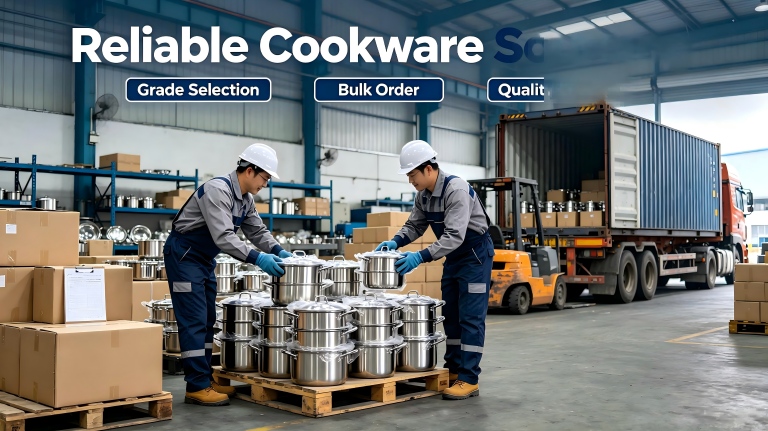
For many growing businesses, mixing both grades is the most profitable strategy. You can launch 201 stainless steel entry-level sets to capture price-sensitive customers and 304 premium lines to improve brand image and high-profit orders. Our team can help you customize mixed-grade sourcing plans to balance cost and quality. Browse our full product range here: Cookware Page
Conclusion
201 and 304 stainless steel serve completely different market segments in the cookware industry. 201 stainless steel is a cost-effective entry-level material ideal for low-budget bulk sales, while 304 stainless steel is a premium food-grade material built for long-term branding and commercial use. Understanding their differences in corrosion resistance, safety, lifespan, and pricing allows you to avoid blind material selection, reduce after-sales issues, and precisely match products to your target audience. Choosing the right stainless steel grade is one of the simplest and most effective ways to improve your overall sourcing profitability.
Unsure which stainless steel grade fits your market and budget? Contact us for material selection advice today. The Venus Sourcing team provides professional grade analysis, customized product matching, factory verification, and one-stop cookware sourcing solutions to help you source high-quality, market-matched kitchenware with maximum profit margins.